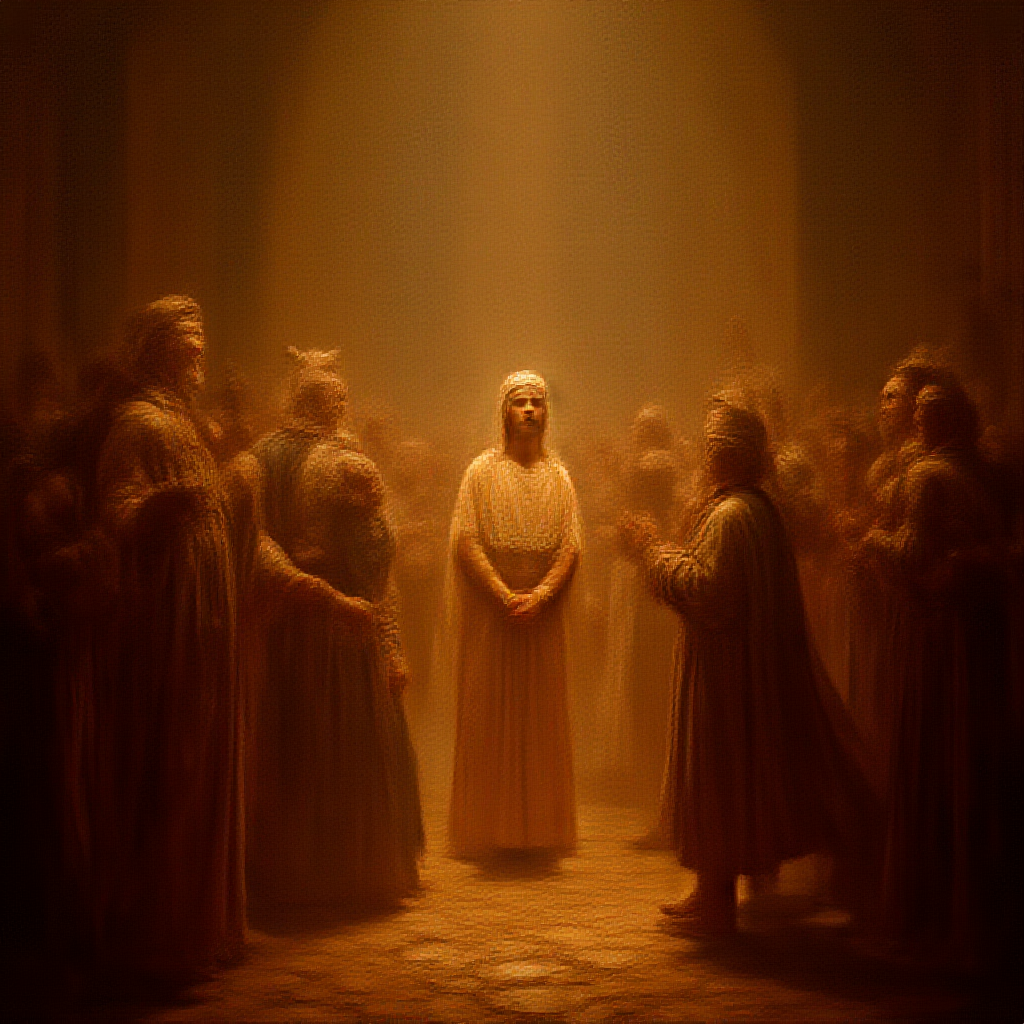
Ester Saves the Jews
440 BC
📖 About This Event
Queen Esther, a Jewish orphan raised by her cousin Mordecai in the Persian capital of Susa, risked her life to save the Jewish people from destruction. When Haman, the king's chief minister, obtained a decree authorizing the massacre of all Jews in the Persian Empire, Mordecai called for a fast and sent a message to Esther: 'Do not think that you will escape in your house any more than all the other Jews. For if you wholly keep silence at this time, relief and deliverance will rise for the Jews from another place, and you and your father's house will perish. And who knows whether you have not come to the kingdom for such a time as this?' Esther responded, 'Go, gather all the Jews who are in Susa, and fast for me; do not eat or drink for three days, night or day. I and my maids will fast as you do. Thus will I go to the king, though it is against the law. And if I perish, I perish' (Esther 4:14-16). Esther approached the king, who held out his golden scepter, and she lived. At a banquet, she revealed her Jewish identity and Haman's plot, and the king had Haman hanged. The Jews were permitted to defend themselves, and they defeated their enemies. The fast and the victory became the basis for the Jewish feast of Purim.
The Catholic Church sees in Esther a type of the Church, which intercedes for God's people before the throne of grace. Her courage and faithfulness in the face of danger make her a model of heroic virtue, and her story has inspired countless believers throughout history who have faced persecution for their faith. The feast of Purim, celebrated by the Jewish people, commemorates God's deliverance of His people through the instrument of a faithful woman. Key Scripture: Esther 1-10