The Exodus
1446 BC
📖 About This Event
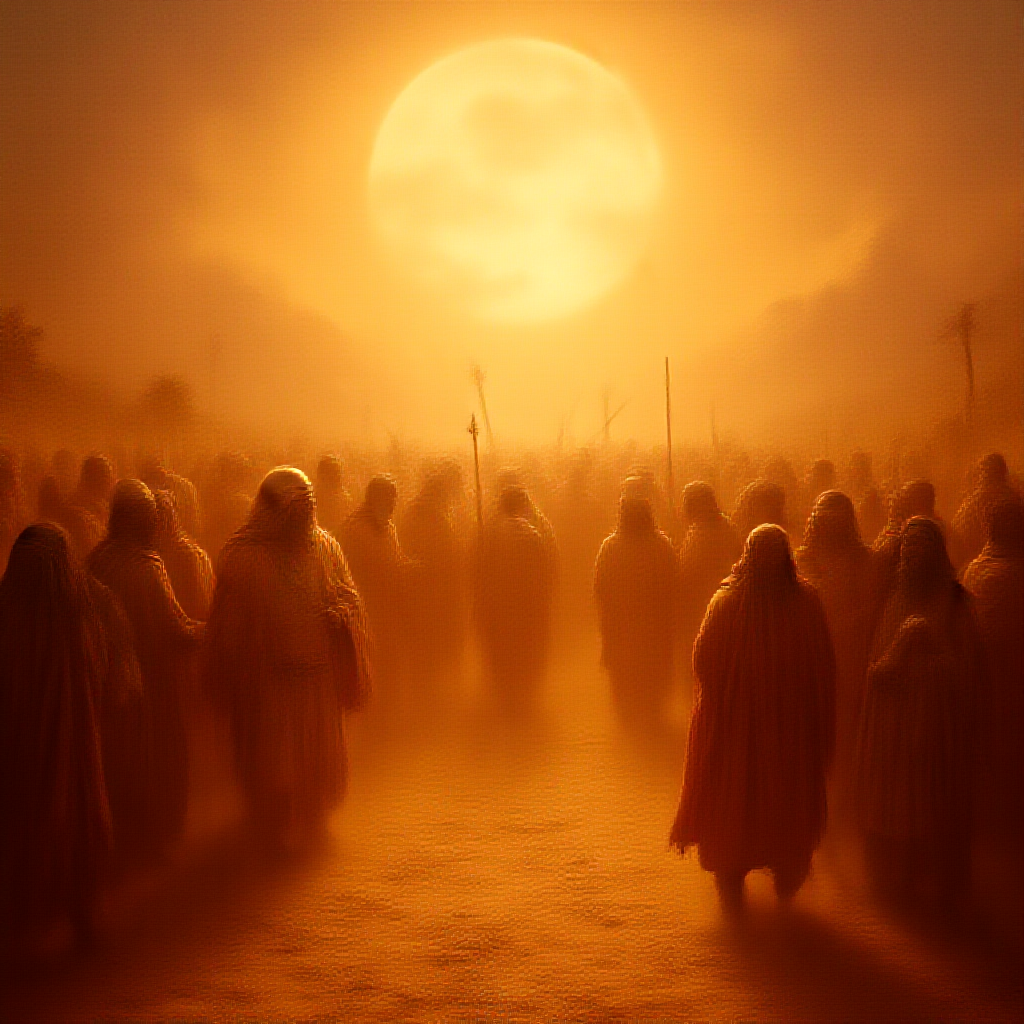
The Exodus—the deliverance of the Israelites from slavery in Egypt—is the foundational event of Israel's identity and one of the most significant narratives in all of Scripture. After centuries of bondage, God raised up Moses as His deliverer. Through ten devastating plagues, God demonstrated His sovereignty over the Egyptian gods and compelled Pharaoh to release His people. The tenth plague—the death of the firstborn—was averted for the Israelites through the Passover sacrifice, in which each family killed a lamb and marked their doorposts with its blood.
'Let my people go, that they may worship me' (Exodus 5:1) was God's simple and non-negotiable demand. The Exodus was not merely a political liberation but a religious one—God was calling His people out of Egypt to be His own, a kingdom of priests and a holy nation (Exodus 19:6). The crossing of the Red Sea, the provision of manna and quail, the water from the rock, and the guidance of the pillar of cloud and fire all demonstrated God's ongoing care for His people in the wilderness.
The Catholic Church sees the Exodus as the great saving event of the Old Testament, a type of Christ's redemption. Baptism is understood as a participation in the Exodus—passing through the waters from slavery to freedom. The Passover lamb is a direct type of Christ, the Lamb of God who takes away the sin of the world. Key Scripture: Exodus 1-15; Deuteronomy 7:8; 1 Corinthians 10:1-4; CCC 69-70, 1218, 2197