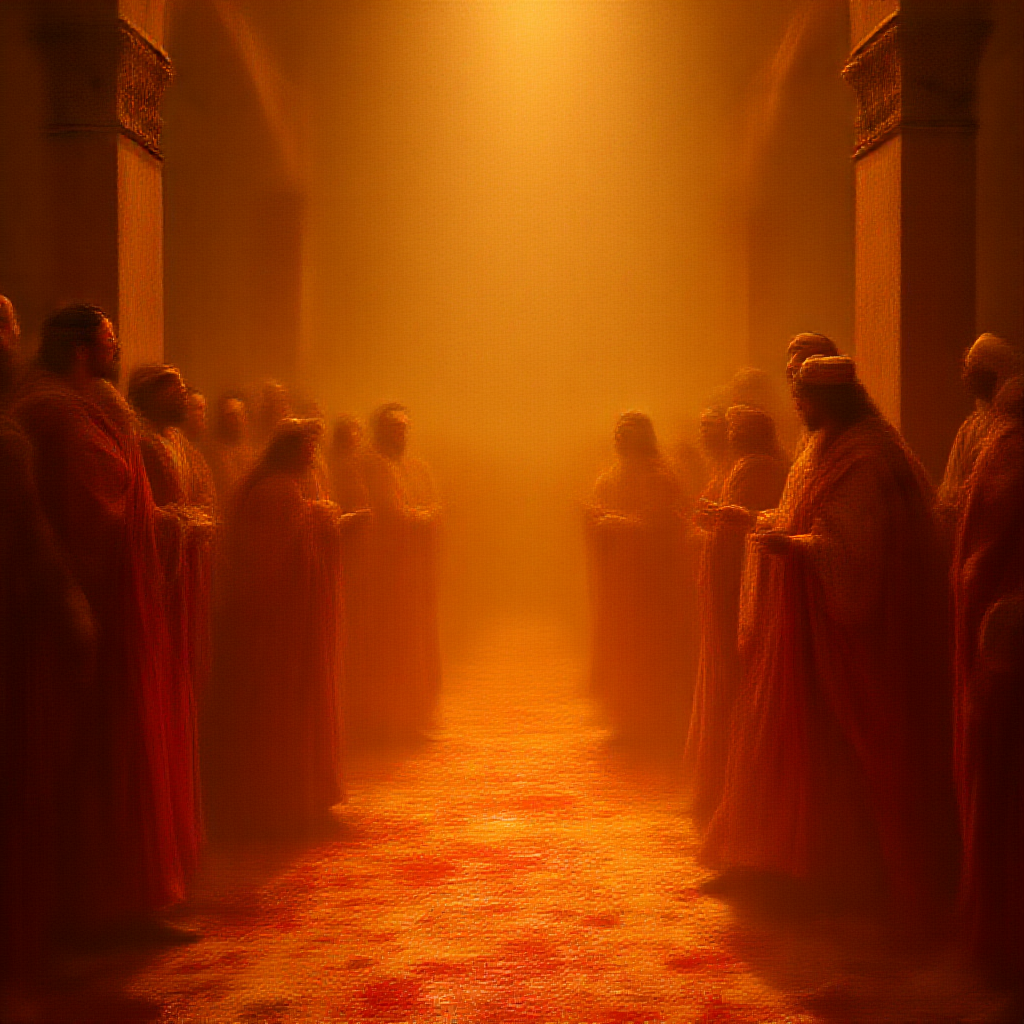
The Passover
1446 BC
📖 About This Event
The Passover is the central event of the Exodus narrative and one of the most important typological events in all of Scripture. The tenth plague—the death of the firstborn—was preceded by God's instruction to Moses: 'On the tenth of this month every man of the congregation of Israel shall take a lamb, a lamb for a household. Your lamb shall be without blemish, a male a year old. You may take it from the sheep or from the goats, and you shall keep it until the fourteenth day of this month, when the whole assembly of the congregation of Israel shall kill their lambs at twilight. Then they shall take some of the blood and put it on the two doorposts and the lintel of the houses in which they eat it. They shall eat the lamb that same night; they shall eat it roasted over the fire with unleavened bread and bitter herbs' (Exodus 12:3-8).
The blood of the lamb on the doorposts was the sign that caused the Lord to 'pass over' that house, sparing the firstborn inside. Every firstborn in Egypt died—from the son of Pharaoh who sat on his throne to the firstborn of the captive in the dungeon—but not a single dog was barked at among the Israelites who had obeyed God's command. The Passover lamb, without blemish, whose blood saves, is the most direct Old Testament type of Jesus Christ, the Lamb of God who takes away the sin of the world (John 1:29). St. Paul declares, 'Christ, our Passover lamb, has been sacrificed' (1 Corinthians 5:7).
The Catholic Church sees the Passover as the great prefiguration of the Eucharist. Just as the Israelites ate the lamb and were saved, so Christians partake of the Body and Blood of Christ and receive eternal life. The Last Supper, at which Jesus instituted the Eucharist, was a Passover meal. The unleavened bread, the bitter herbs, the roasted lamb—all find their fulfillment in the sacrament of the altar. The Passover remains a central feast in the Jewish liturgical calendar and is commemorated in the Catholic liturgy throughout Holy Week. Key Scripture: Exodus 12; John 1:29; 1 Corinthians 5:7; CCC 1081-1082, 1337