Tower of Babel
2346 BC
📖 About This Event
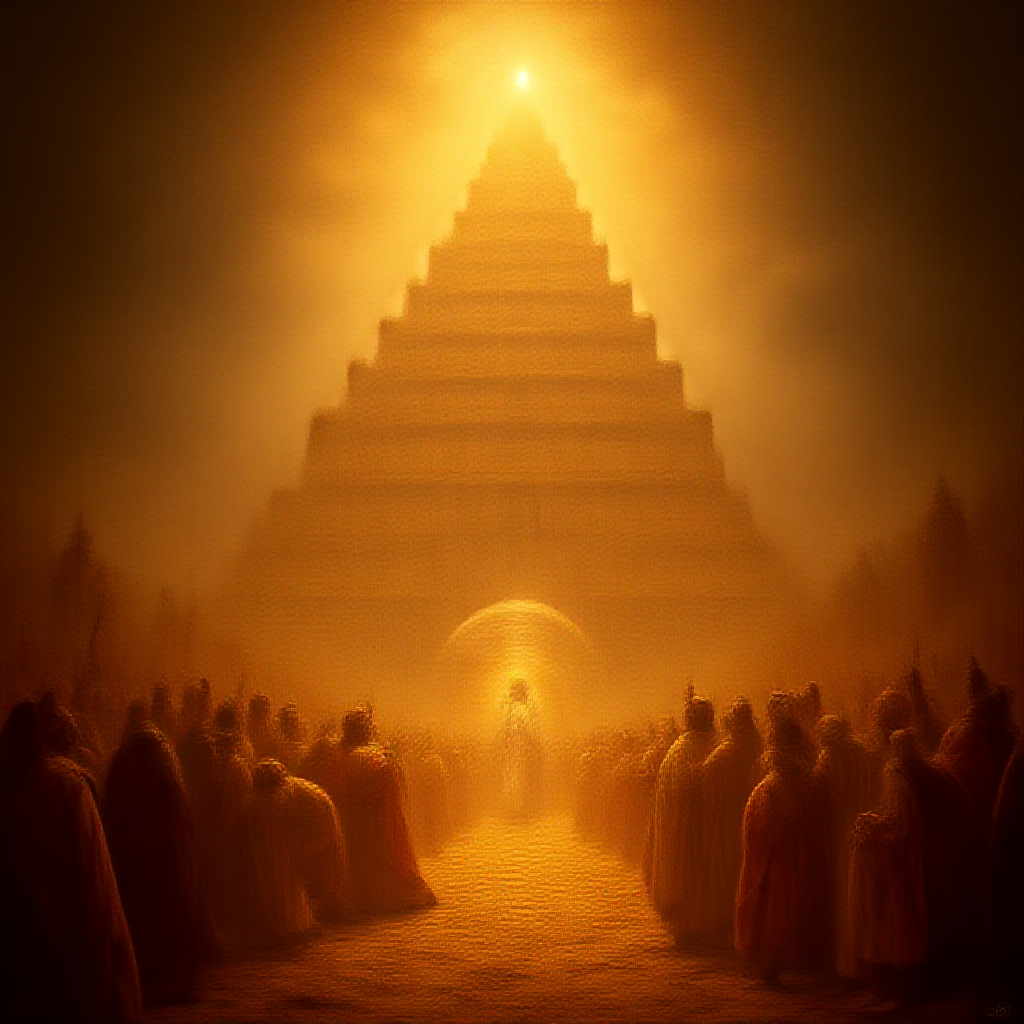
The Tower of Babel (Genesis 11:1-9) is one of the most enigmatic narratives in the Old Testament. After the flood, all the earth spoke one language. As the people migrated eastward, they settled in the plain of Shinar and decided to build a city with a tower 'whose top is in the heavens' to 'make a name for ourselves, lest we be scattered abroad over the face of the whole earth.' This was an act of human pride and defiance against God's command to fill the earth.
The Lord came down to see the city and the tower, and He observed: 'Behold, they are one people, and they all have the same language. And this is only the beginning of what they will do. And nothing that they propose to do will now be impossible for them.' In response, God confused their language so they could not understand each other, and He scattered them over the face of the earth. The city was called Babel (which sounds like the Hebrew word for 'confuse'), because there the Lord confused the language of all the earth.
The Catholic Church sees the Tower of Babel as a picture of human pride and the consequences of unity without God. Its reversal comes at Pentecost, when the Holy Spirit enables people of every language to understand the Gospel. Key Scripture: Genesis 11:1-9; Acts 2:1-11; CCC 39-40