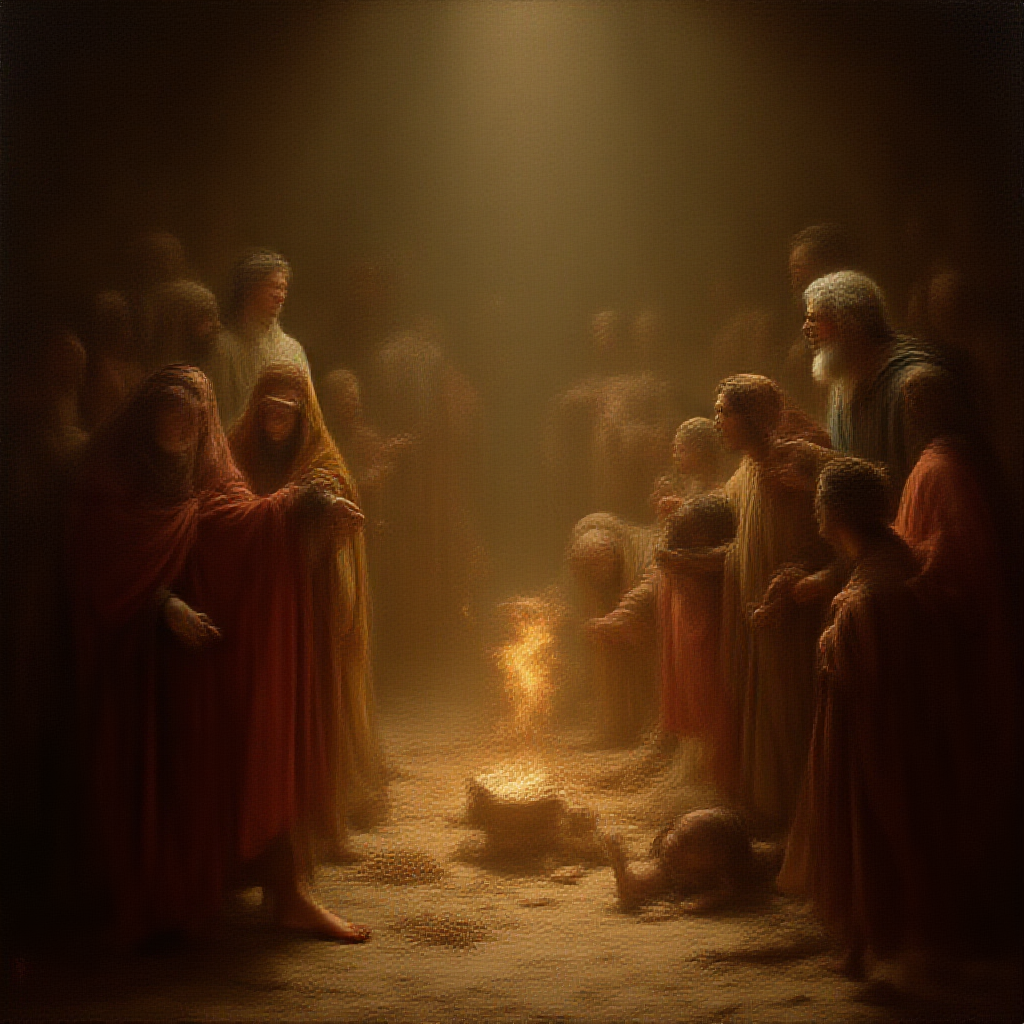
David's Sin with Bathsheba
980 BC
📖 About This Event
David's sin with Bathsheba is one of the most sobering episodes in the Old Testament, demonstrating that even the greatest of God's servants remain subject to the power of sin. In the spring, when kings normally went to war, David remained in Jerusalem. From his rooftop, he saw Bathsheba, the wife of Uriah the Hittite (one of David's own soldiers), bathing. Desire overcame him, and he sent messengers to take her and lie with her. When Bathsheba became pregnant, David summoned Uriah from battle, hoping Uriah would sleep with his wife and conceal the pregnancy. But Uriah's loyalty prevented him from enjoying himself at home while his comrades were in battle.
When Uriah's loyalty thwarted David's plan, David resorted to murder. He sent Uriah back to the front lines with a letter to Joab commanding that Uriah be placed in the hottest part of the battle and then abandoned, so that he would be struck down. Uriah died, and David took Bathsheba as his wife. But the Lord sent the prophet Nathan to confront David with a parable of a rich man who stole a poor man's only lamb. David's righteous anger at the parable turned on himself when Nathan declared: 'You are the man!' (2 Samuel 12:7).
David's response to Nathan's confrontation stands as the model of repentance in Scripture: 'I have sinned against the Lord' (2 Samuel 12:13). God forgave David, but the consequences remained—the child died, and violence would plague David's family. David's Psalm 51, composed in repentance, remains one of the most beautiful prayers of contrition in all of literature. Key Scripture: 2 Samuel 11-12; Psalm 51; James 5:16; CCC 1437