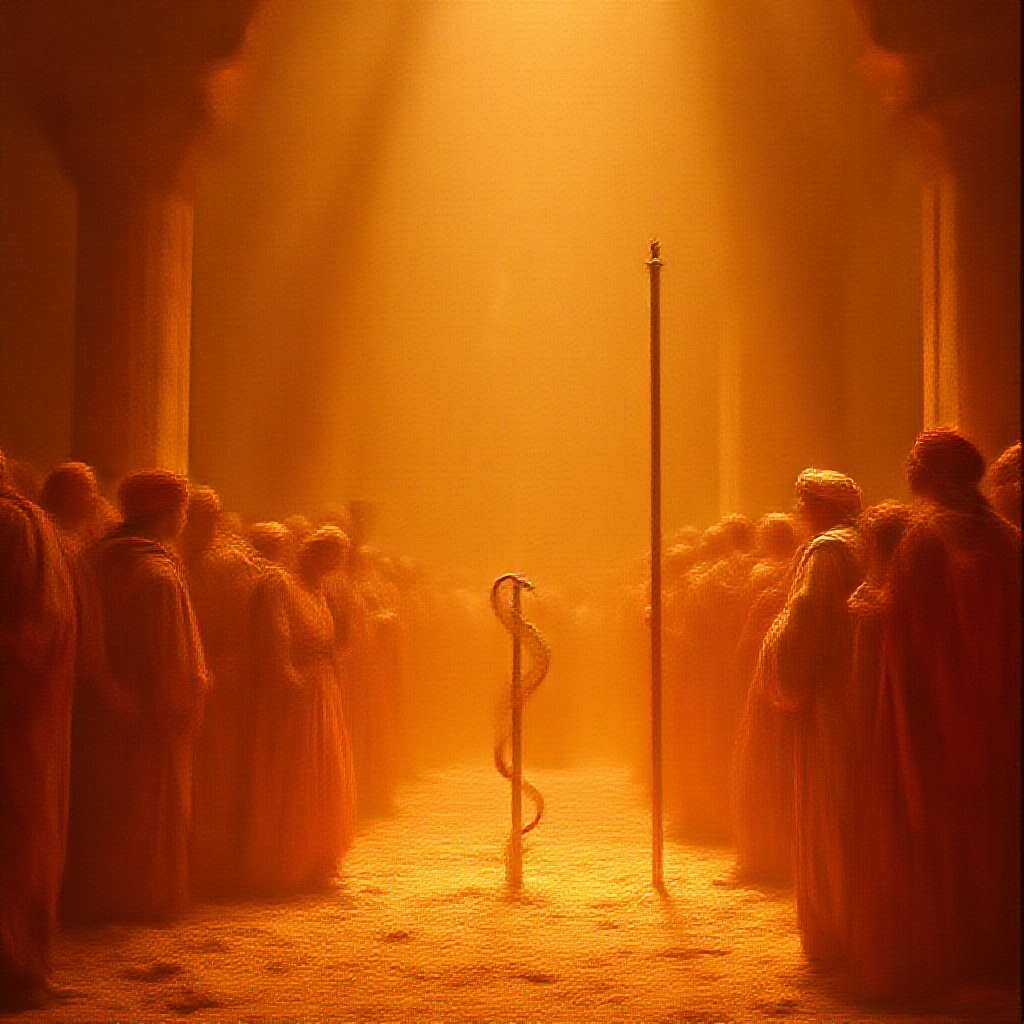
The Bronze Serpent
1409 BC
📖 About This Event
During the wilderness wanderings, the Israelites grew impatient with their journey and began to complain against God and Moses, saying, 'Why have you brought us up out of Egypt to die in the wilderness? For there is no bread and no water, and we loathe this worthless food' (Numbers 21:5). In response to their murmuring, God sent fiery serpents among the people, and many died. The people repented, and Moses interceded for them. God instructed Moses: 'Make a fiery serpent and set it on a pole, and everyone who is bitten, when he sees it, shall live.' Moses made a bronze serpent and put it on a pole, and whenever a serpent bit someone, that person looked at the bronze serpent and lived.
Jesus Himself identified the bronze serpent as a type of His crucifixion: 'And as Moses lifted up the serpent in the wilderness, so must the Son of Man be lifted up, that whoever believes in him may have eternal life' (John 3:14-15). The connection is striking: the Israelites who were dying from serpent bites were healed by looking at a bronze serpent on a pole; sinners who are dying from the poison of sin are healed by looking to Christ lifted up on the cross.
Interestingly, the bronze serpent later became an object of idolatry, and King Hezekiah destroyed it (2 Kings 18:4), demonstrating that even sacred objects can become idols when worshipped rather than serving as pointers to God. Key Scripture: Numbers 21:4-9; John 3:14-15; 2 Kings 18:4; CCC 600