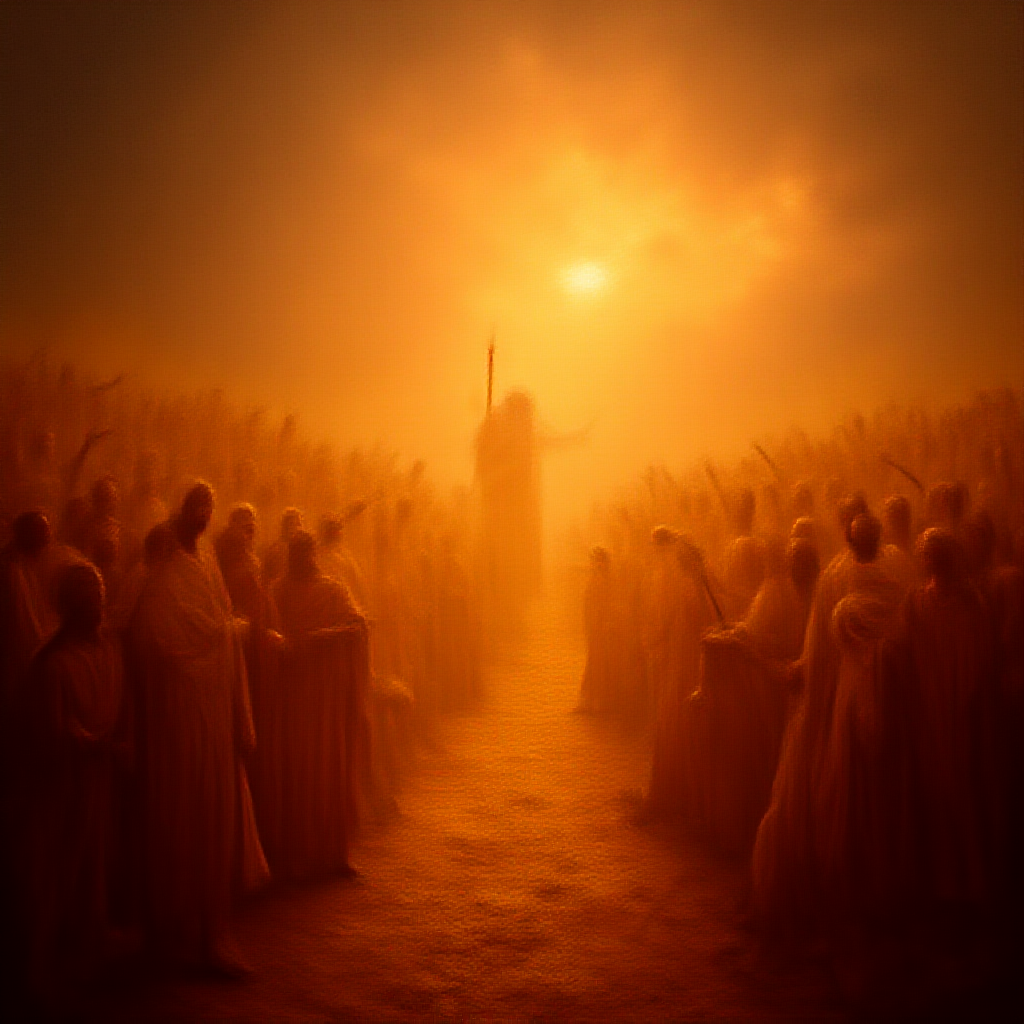
Elijah the Prophet
930 BC
📖 About This Event
Elijah ('My God is the Lord'), one of the greatest prophets of the Old Testament, appeared suddenly in Israel during the reign of King Ahab and Queen Jezebel, who had introduced the worship of Baal to the northern kingdom. Elijah's opening declaration was a challenge: 'As the Lord, the God of Israel, lives, before whom I stand, there shall be neither dew nor rain these years, but by my word.' His ministry was a confrontation between the true God of Israel and the false god Baal.
Elijah's most dramatic confrontation occurred on Mount Carmel, where he challenged 450 prophets of Baal and 400 prophets of Asherah to a contest: each side would prepare a sacrifice, and the god who answered by fire would be acknowledged as the true God. The prophets of Baal called from morning till noon, but there was no response. Elijah then repaired the altar of the Lord, drenched the sacrifice with water three times, and prayed. 'The fire of the Lord fell and consumed the burnt offering and the wood and the stones and the dust, and it licked up the water that was in the trench' (1 Kings 18:38). The people fell on their faces and said, 'The Lord, he is God!'
Elijah was taken to heaven in a whirlwind, ascending in a chariot of fire. The Catholic Church honors Elijah as a forerunner of the Messiah—Jesus identified John the Baptist as 'Elijah who is to come' (Matthew 11:14). Key Scripture: 1 Kings 17-19; 1 Kings 18; 2 Kings 2; Malachi 4:5-6; Matthew 17:3; CCC 54