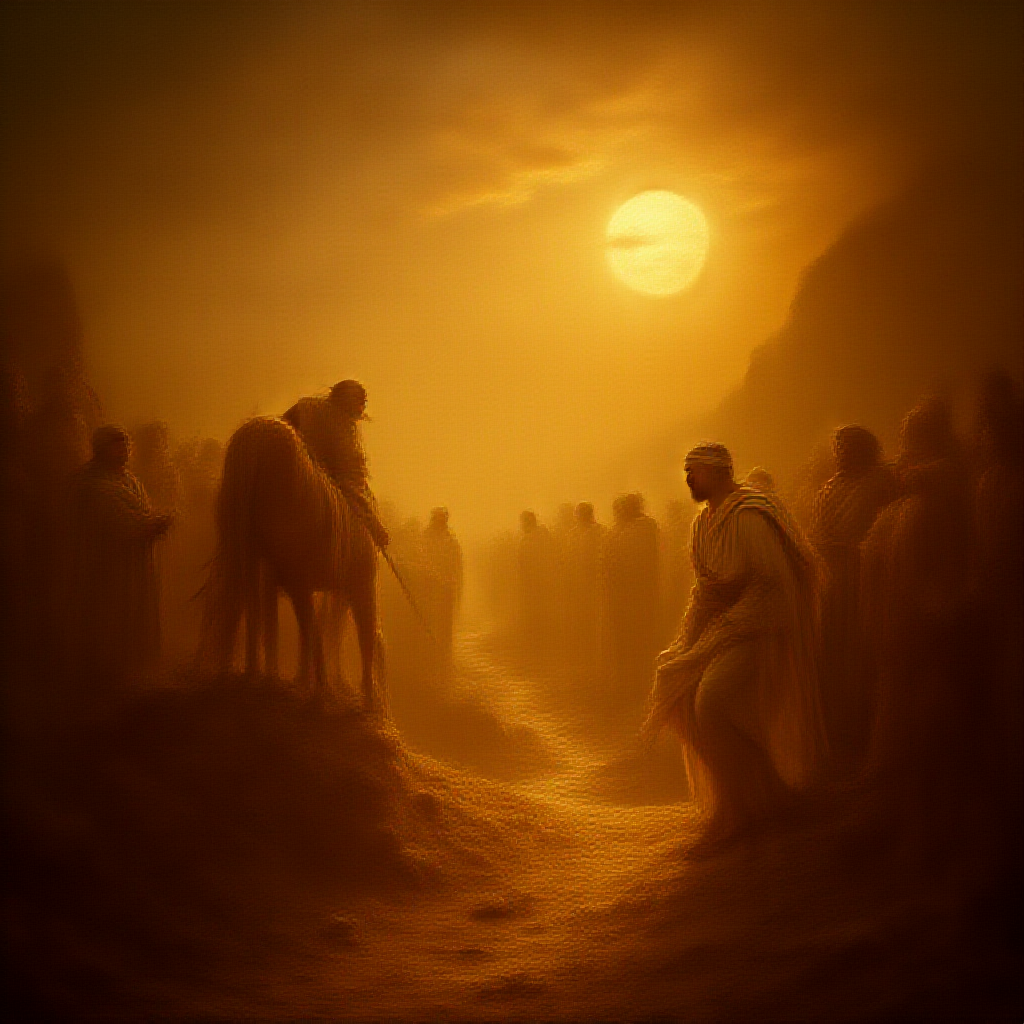
Death of Moses
1406 BC
📖 About This Event
Moses, the greatest prophet of the Old Testament, died on Mount Nebo in the land of Moab, overlooking the Promised Land that he would never enter. After leading the Israelites out of Egypt and through forty years of wilderness wanderings, Moses climbed Mount Nebo at God's command. God showed him the entire Promised Land—from Gilead to Dan, all of Naphtali, the land of Ephraim and Manasseh, all the land of Judah as far as the sea, the Negeb, and the Plain of Jericho. 'This is the land of which I swore to Abraham, Isaac, and Jacob,' God said. Then Moses died, and the Lord buried him in the valley opposite Beth-peor. Moses was 120 years old when he died, and 'his eye was undimmed, and his vigor unabated' (Deuteronomy 34:7).
Moses' death was the consequence of his sin at Meribah, where he struck the rock twice instead of speaking to it as God commanded (Numbers 20:12). Despite this punishment, God honored Moses with a dignified death—He personally buried him—and granted him a final view of the land he had led His people toward. The location of Moses' tomb was kept secret (Jude 1:9 records a dispute between Michael the archangel and the devil over Moses' body).
The Catholic Church honors Moses as the great lawgiver and prophet. Jesus and Moses appear together at the Transfiguration, representing the Law and the Prophets bearing witness to Christ. Moses is the type of Christ in many ways: both were delivered as infants from death, both led God's people, both mediated a covenant. Key Scripture: Deuteronomy 34; Numbers 20:12; Matthew 17:3; Acts 3:22-23; CCC 57-59