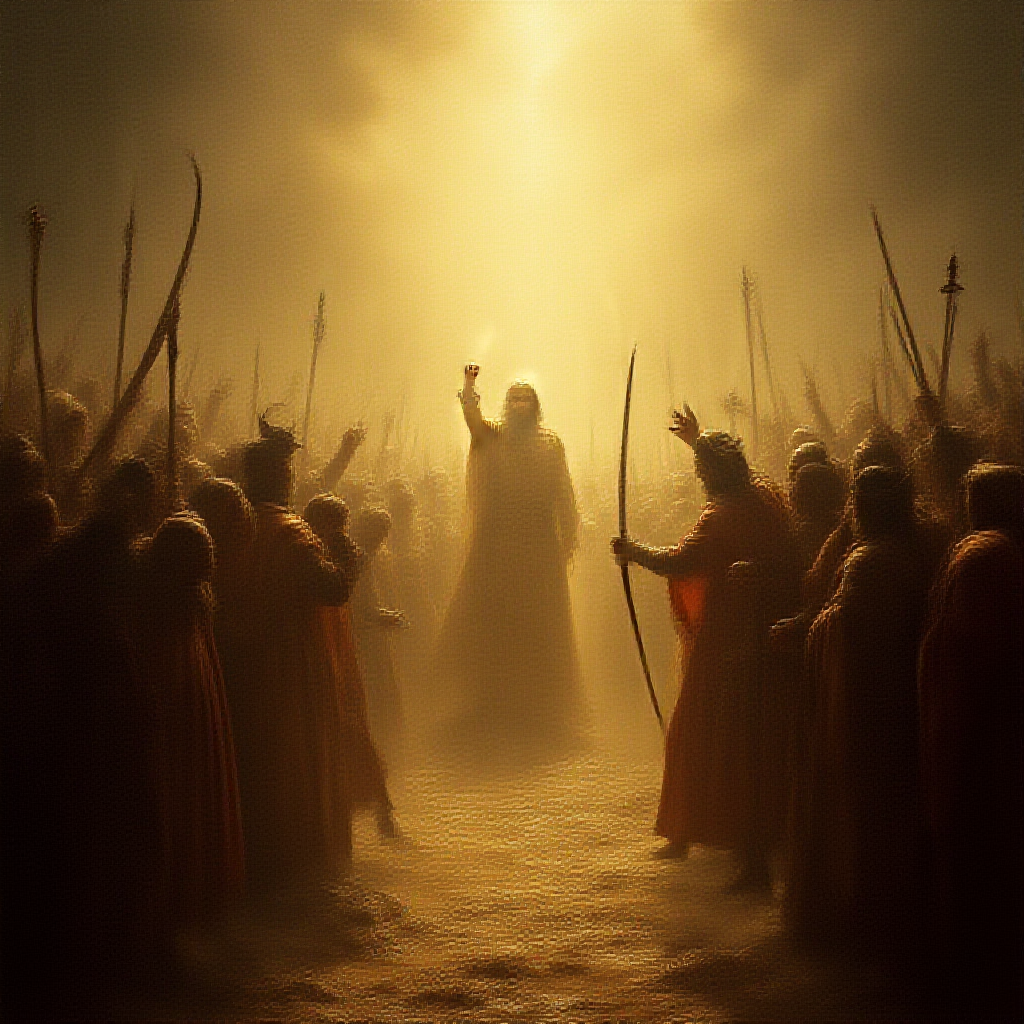
King Jehu's Zeal
853 BC
📖 About This Event
Jehu, a military commander of the northern kingdom of Israel, was anointed king by a prophet sent by Elijah with the mission of destroying the house of Ahab and eradicating the worship of Baal from Israel (2 Kings 9). Jehu's coup was swift and brutal: he killed King Joram of Israel at Jezreel, Ahaziah of Judah (who was visiting), and Jezebel (Ahab's wicked wife, who was thrown from a window and trampled by horses). His zeal was remarkable in its thoroughness—he gathered all the prophets and worshippers of Baal and slaughtered them in the temple of Baal at Samaria.
God acknowledged Jehu's zeal: 'You have done well to plot against your master's house. According to my word I have done to you' (2 Kings 10:30). Yet God also noted that Jehu did not turn from the sins of Jeroboam—the golden calves at Bethel and Dan. Jehu's zeal was selective: he destroyed Baal worship but maintained the idolatry that Jeroboam had established. The Catholic Church sees in Jehu a lesson about the danger of partial reform—destroying one form of idolatry while maintaining another is not true conversion.
Despite his partial reform, Jehu's dynasty would last four generations, fulfilling God's promise. His story demonstrates that God can use even flawed and violent instruments to accomplish His purposes. Key Scripture: 2 Kings 9-10; Romans 11:4; CCC 54