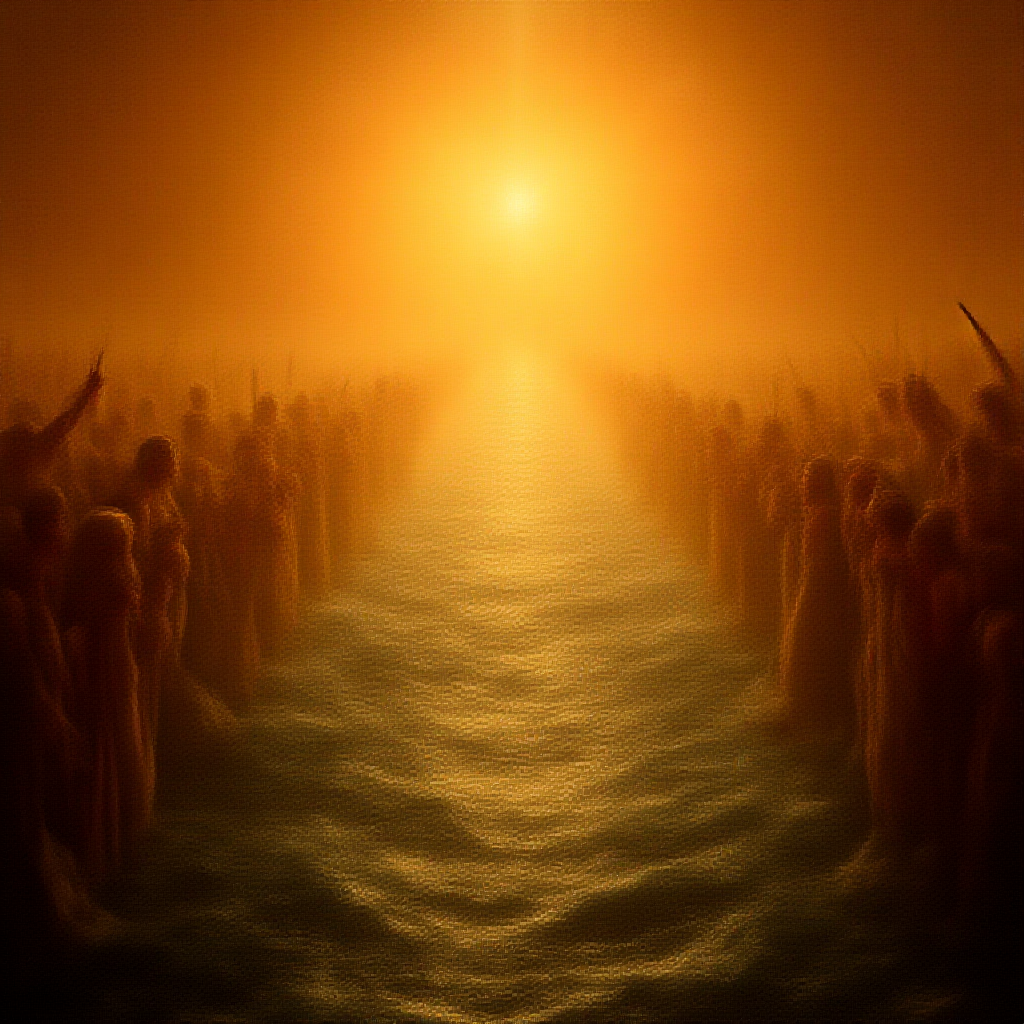
Crossing the Red Sea
1446 BC
📖 About This Event
The Crossing of the Red Sea is one of the most dramatic and theologically significant events in the Old Testament. After the Passover plague, Pharaoh reluctantly released the Israelites, but when he saw them leaving, he changed his mind and pursued them with 600 chariots and the best of his army. The Israelites, trapped between the sea and the Egyptian forces, panicked. Moses told them, 'Do not be afraid, stand firm, and see the salvation of the Lord that he will work for you today' (Exodus 14:13).
God commanded Moses to stretch out his hand over the sea, and the Lord drove the sea back with a strong east wind all night, making the waters dry land. The Israelites walked through on dry ground, with walls of water on their right and left. When the Egyptians pursued them into the sea bed, God told Moses to stretch out his hand again, and the waters returned, drowning the entire Egyptian army. 'That day the Lord saved Israel from the hand of the Egyptians, and Israel saw the Egyptians dead on the seashore' (Exodus 14:30).
The Catholic Church sees the Red Sea crossing as a type of baptism. St. Paul writes, 'Our fathers were all under the cloud and all passed through the sea, and all were baptized into Moses in the cloud and in the sea' (1 Corinthians 10:1-2). The waters that destroyed Egypt become the means of salvation for Israel, just as the waters of baptism wash away sin and bring new life in Christ. Key Scripture: Exodus 14; Psalm 77; 1 Corinthians 10:1-4; Hebrews 11:29; CCC 1218, 2197