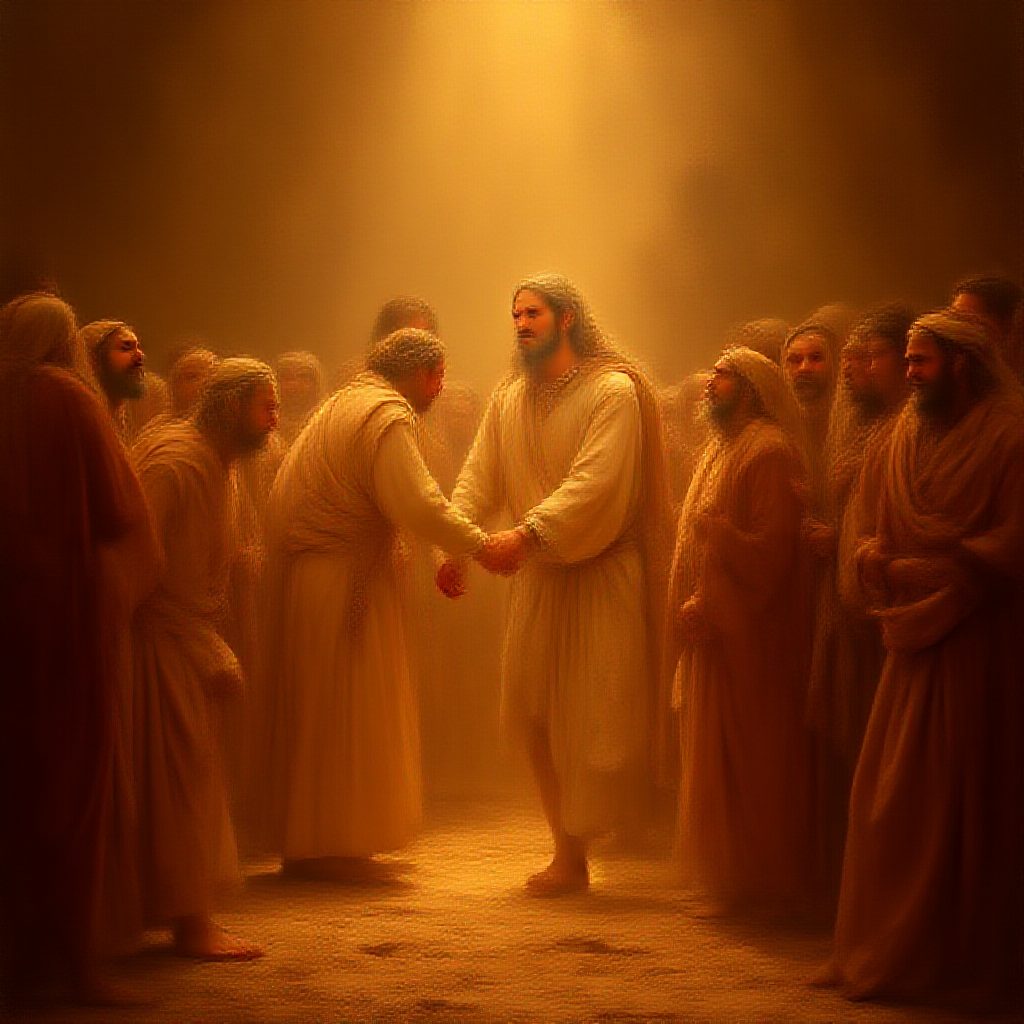
Jacob Marries Leah and Rachel
1884 BC
📖 About This Event
Jacob's marriages to Leah and Rachel form one of the most complex family dramas in Scripture. After fleeing from his brother Esau, Jacob arrived in Haran and met Rachel at the well. He agreed to work for his uncle Laban seven years to marry Rachel, 'and they seemed but a few days because of the love he had for her.' But on the wedding night, Laban deceived Jacob, giving him Leah instead. When Jacob discovered the deception, Laban offered Rachel as well, saying it was not the custom to give the younger daughter before the firstborn. Jacob worked another seven years for Rachel.
The rivalry between Leah and Rachel would produce eleven of the twelve tribes of Israel. Leah, though less loved, bore four sons (Reuben, Simeon, Levi, Judah) and a daughter (Dinah). Rachel, though beloved, was initially barren and gave her maid Bilhah to Jacob, who bore Dan and Naphtali. Leah also gave her maid Zilpah, who bore Gad and Asher. Finally, Leah bore Issachar and Zebulun, and Rachel bore Joseph and (after Jacob's return to Canaan) Benjamin.
God's sovereignty is evident throughout this tangled family history. Despite Laban's deception, Jacob's marriages produced the twelve patriarchs of Israel. Through Judah (son of Leah), the line of kings and ultimately the Messiah would come. Through Joseph (son of Rachel), the family would be preserved in Egypt. Key Scripture: Genesis 29:1-30; 30:1-24; CCC 60