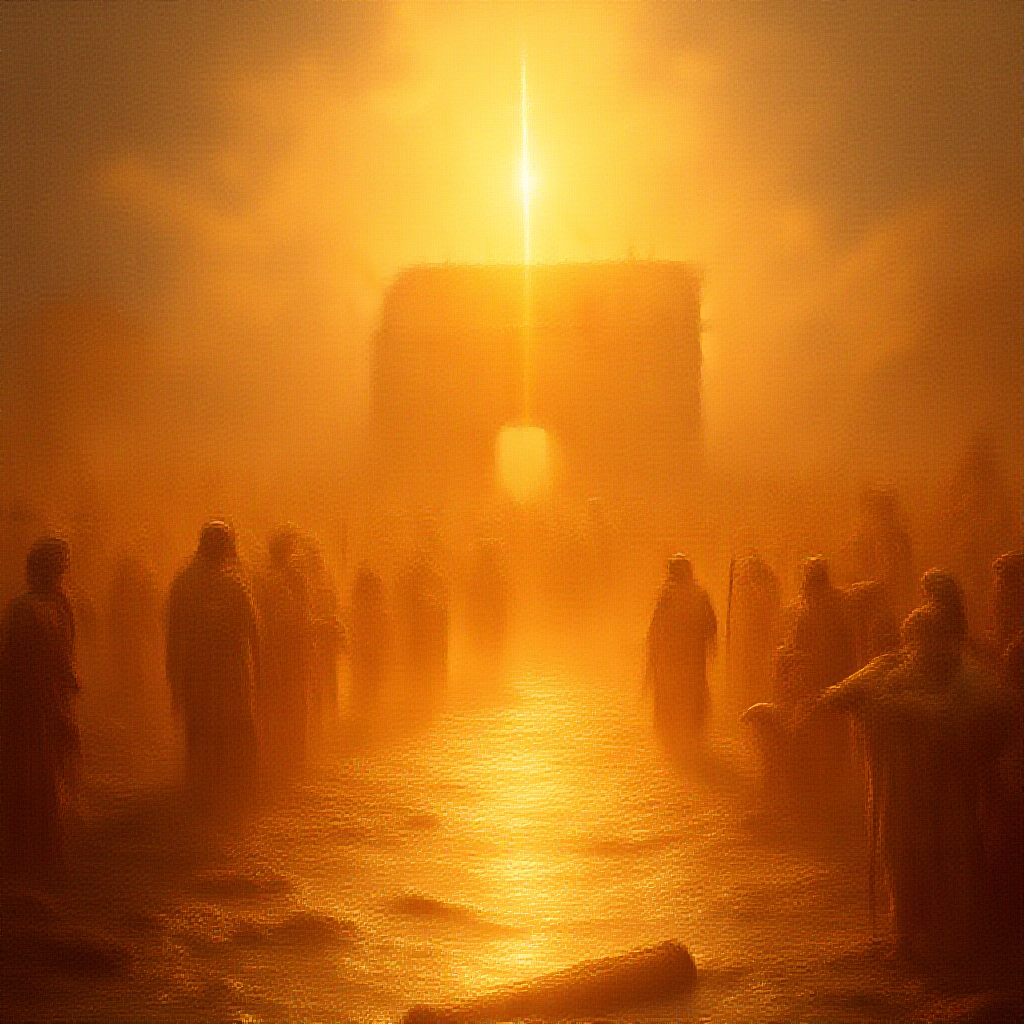
The Tabernacle Constructed
1445 BC
📖 About This Event
After receiving the Ten Commandments and the laws at Sinai, God gave Moses detailed instructions for the construction of the Tabernacle—a portable sanctuary where His presence would dwell among His people. Exodus 25-31 and 35-40 describe the elaborate specifications: an outer court with a bronze altar, an inner tent (the Holy Place) with the table of showbread, the golden lampstand, and the altar of incense, and the innermost chamber (the Holy of Holies) containing the Ark of the Covenant. Every detail was divinely prescribed: 'According to all that I show you concerning the pattern of the tabernacle and the pattern of all its furniture, just so you shall make it' (Exodus 25:9).
The Tabernacle was constructed by skilled craftsmen from the tribes of Judah and Dan, under the supervision of Bezalel and Oholiab, whom God filled with the Spirit of skill and artistry. When Moses saw that the work was done, he blessed the people, and 'the cloud covered the tent of meeting, and the glory of the Lord filled the tabernacle' (Exodus 40:34). God's presence dwelt among His people in a visible and tangible way.
The Catholic Church sees the Tabernacle as a type of the Eucharist and the Church. The Holy of Holies, where God's presence dwelt, prefigures the Blessed Sacrament. The bread and wine offered in the Tabernacle prefigure the Body and Blood of Christ. The Tabernacle's portability foreshadows the Incarnation—God dwelling among His people 'tabernacling' in the person of Jesus Christ. Key Scripture: Exodus 25-40; Hebrews 8:5; 9:1-10; John 1:14; CCC 721, 1330