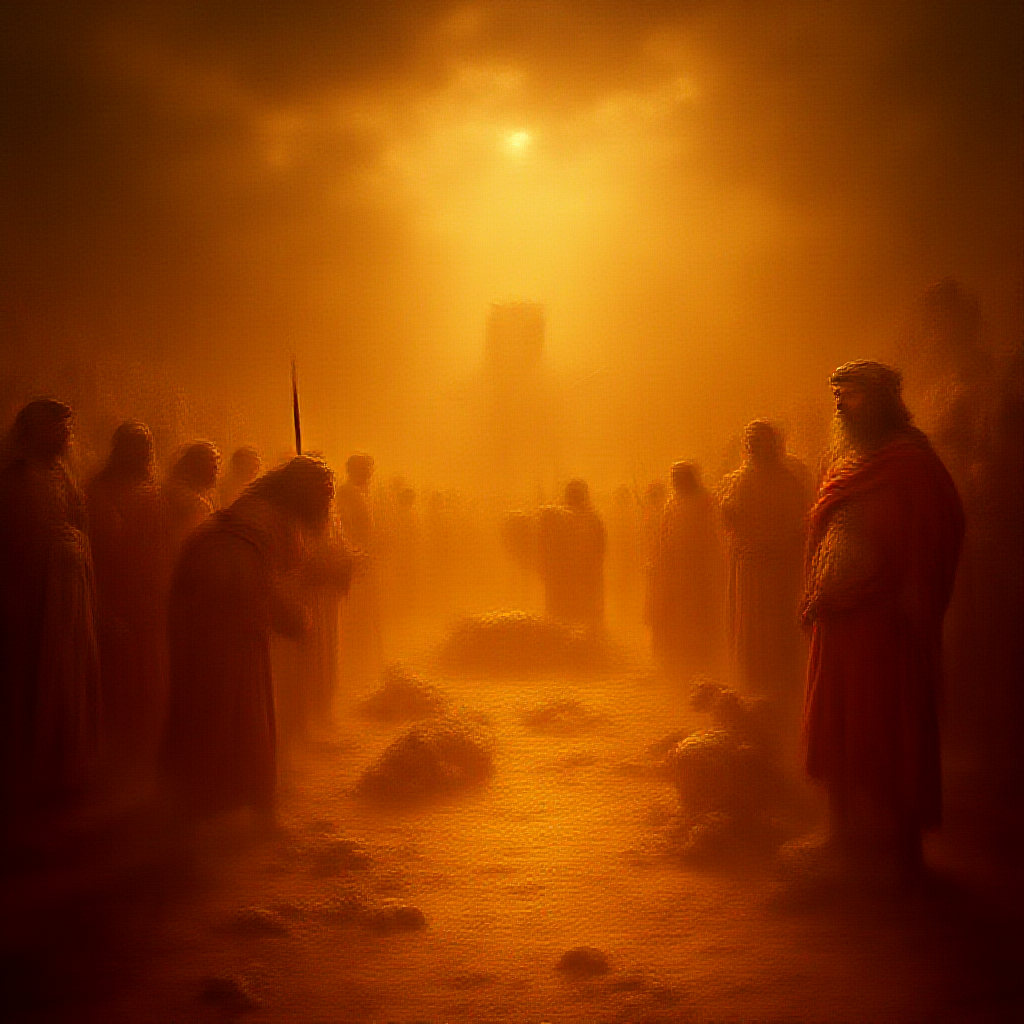
The Golden Calf
1445 BC
📖 About This Event
The Golden Calf is one of the most infamous episodes of apostasy in the Old Testament. While Moses was on Mount Sinai receiving the Law, the people grew impatient with his prolonged absence. They approached Aaron and demanded, 'Up, make us gods who shall go before us. As for this Moses, the man who brought us up out of the land of Egypt, we do not know what has become of him.' Aaron collected their gold earrings and fashioned a golden calf, declaring, 'These are your gods, O Israel, who brought you up out of the land of Egypt!' The people saw it and cried out, 'These are your gods, O Israel, who brought you up out of the land of Egypt!' They sacrificed burnt offerings and brought peace offerings, and the people sat down to eat and drink and rose up to play.
The making of the golden calf was a direct violation of the first two commandments—worship of no other gods and no graven images—and represented a complete rejection of the covenant that God had just established. The people had sworn to obey everything God said, but within weeks they had returned to the idolatry of Egypt. The Catholic Church sees in this episode a warning against the human tendency to replace the invisible God with visible, controllable substitutes. Idolatry, in its deepest sense, is the worship of anything in place of God—wealth, power, pleasure, or self.
When Moses descended from the mountain and saw the calf, he broke the tablets of the Law, burned the calf, ground it to powder, and made the people drink it. He then called for those who were for the Lord, and the Levites rallied to him. About three thousand men fell that day by the sword of the Levites. Moses then interceded for the people, and God relented from destroying them entirely. This episode demonstrates both the severity of idolatry and the power of intercessory prayer. Key Scripture: Exodus 32; Acts 7:40-43; CCC 2113-2117