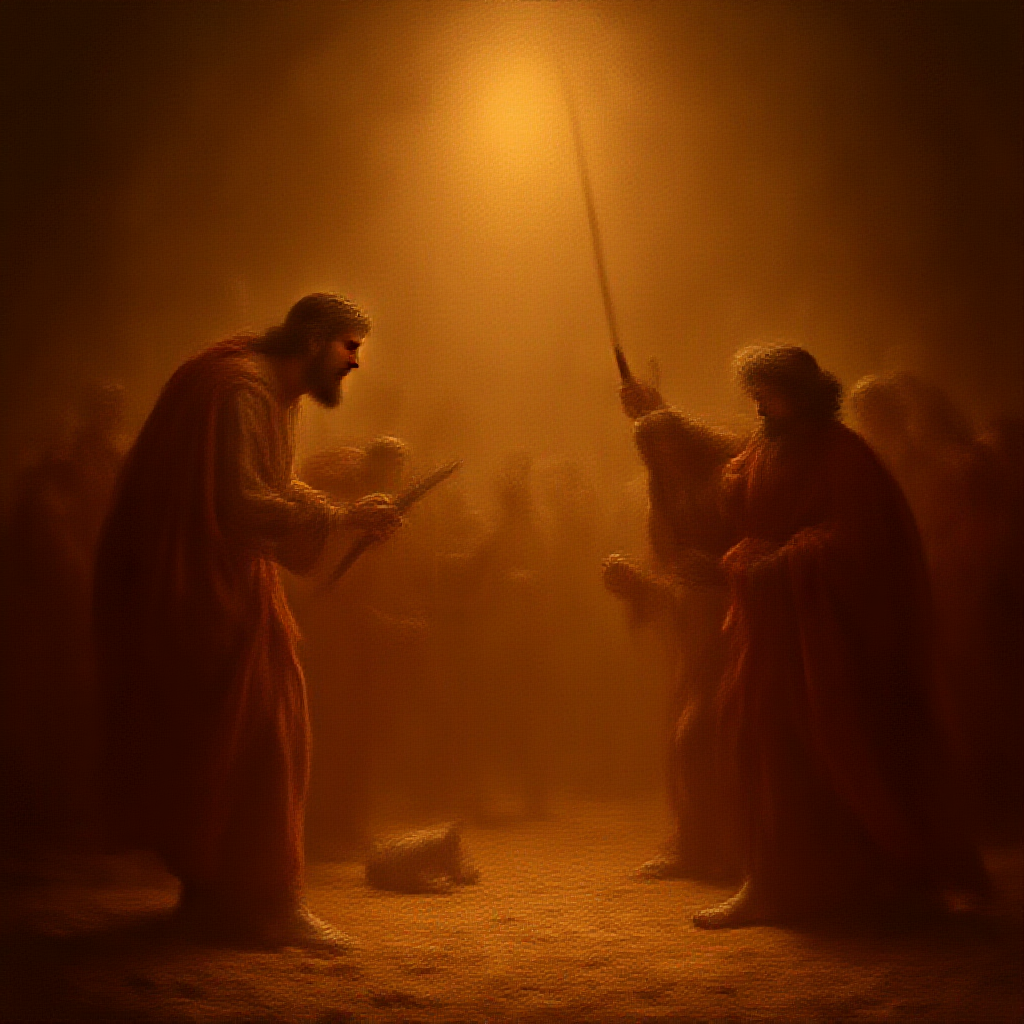
Cain Kills Abel
3974 BC
📖 About This Event
Cain's murder of Abel is the first recorded act of violence in human history, a tragic escalation from disobedience to fratricide. After God rejected Cain's offering, Cain's face fell with anger and jealousy. Despite God's warning that 'sin is crouching at the door,' Cain allowed his pride and resentment to consume him. When he and Abel were in the field, Cain rose up against his brother and killed him—making Abel the first martyr, 'the just one' whose blood cried out from the ground.
God's confrontation with Cain is one of the most memorable dialogues in Scripture. 'Where is Abel your brother?' God asked, and Cain's infamous reply—'I do not know; am I my brother's keeper?'—has echoed through history as the defining statement of indifference to human suffering. God punished Cain by cursing the ground and making him a wanderer, but even in judgment, God showed mercy by placing a mark on Cain to protect him from vengeance. This mark of Cain demonstrates that God's justice is always tempered with mercy.
The Catholic Church sees in Cain's murder the tragic fruit of sin spreading through humanity. Original sin wounded human nature, and Cain's act demonstrated how quickly sin can escalate from internal rebellion to external violence. Abel's blood crying from the ground prefigures the blood of all the righteous martyrs throughout history, culminating in the blood of Christ, whose cry from the cross achieves what Abel's could not—real atonement for sin. Key Scripture: Genesis 4:8-16; Hebrews 11:4; 1 John 3:12; Luke 11:50-51; CCC 2578