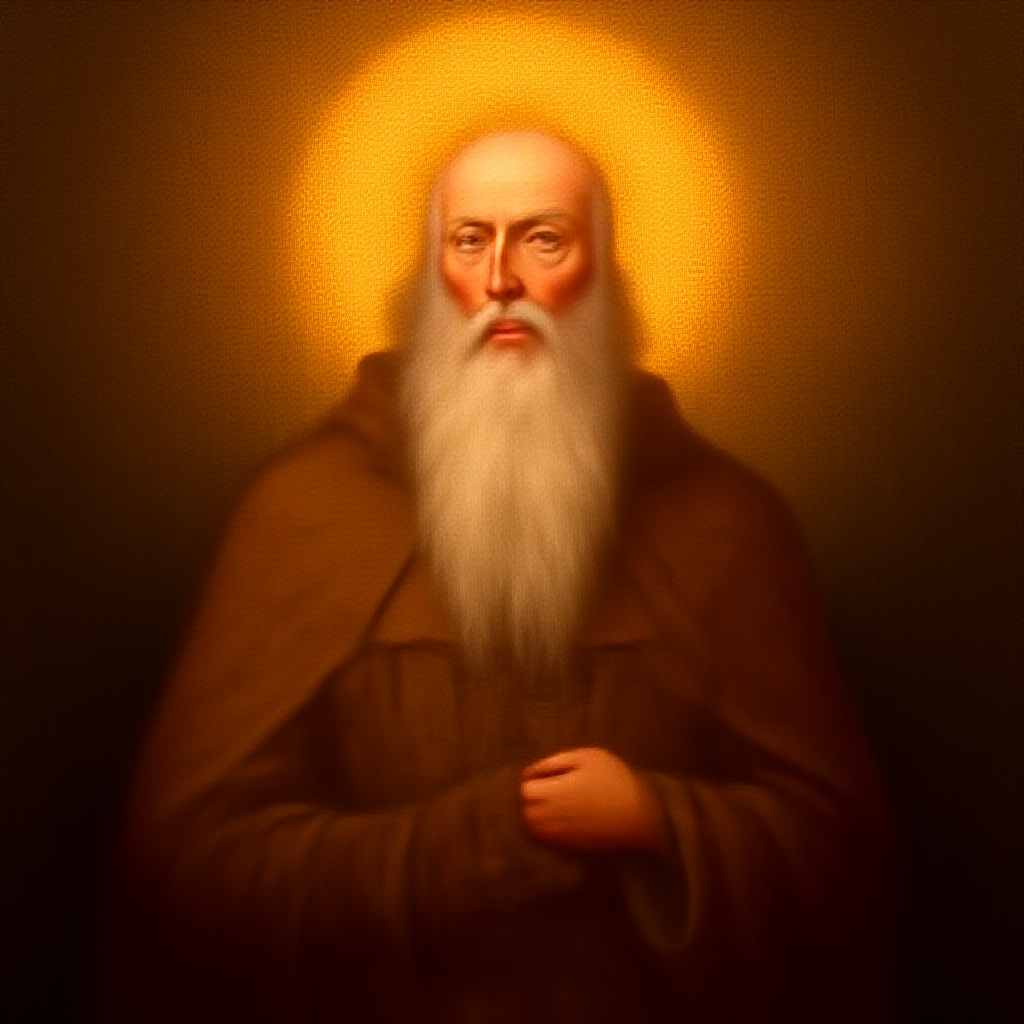
St. Benedict
480-547
📅 Feast Day: Jul 11
📖 Life Timeline
480
Born in Norcia, Italy
493
Becomes hermit at Subiaco
529
Founds Monte Cassino; writes Rule
543
Dies July 2
✝ Biography
Born c.480 AD in Norcia, Umbria, central Italy, to a Christian family. Sent to Rome for studies but fled the moral corruption of the city. Lived as a hermit near Subiaco for three years, gaining a reputation for holiness and miracles. So many sought his guidance that he founded twelve monasteries, each with a superior. After being betrayed by an envious fellow monk who tried to poison him, he moved to Monte Cassino c.529 AD and founded the monastery that became the center of the Benedictine Order. Wrote the 'Rule of St Benedict'—a balanced guide to monastic life emphasizing obedience, stability, and hospitality. The rule's motto: 'Ora et Labora' (Pray and Work). It became the foundation of Western monasticism, preserving learning and culture through the Dark Ages. Expelled a demon from a monk named Florentius by making the sign of the cross. Died March 21, c.543-557 AD at Monte Cassino. His hands were placed on the mouth of a murmuring monk, freeing the demon. Patron of Europe (declared 1980), monks, and students.
🛡 Patronage
Patron of: Europe, monks, abbots, broadcasters, and the European Union.
💬 Words of the Saint
In all things, observe diligence, that you may gather the fruit of your diligence.
📜 Key Facts
Born
March 480, Nursia, Italy
Died
July 11, 547, Monte Cassino
Feast Day
Jul 11
Canonized
Pre-Tridentine
🕊 Legacy
Benedictine monasteries preserved learning, agriculture, medicine, and the arts through the Dark Ages. Their scriptoria copied and preserved ancient manuscripts.
📜 Personal Writings
Read excerpts from the saint's own words — their personal letters, spiritual writings, and teachings.
📖 The Rule of St. Benedict
Rule of St. Benedict: Prologue
Listen, my son, to your master’s precepts, and incline the ear of your heart. Receive willingly and carry out effectively your loving father’s advice, that by the labor of obedience you may return to Him from whom you had departed by the sloth of disobedience. To you, therefore, my words are now addressed, whoever you may be, who are renouncing your own will to do battle under the Lord Christ, the true King, and are taking up the strong, bright weapons of obedience. And first of all, whatever good work you begin to do, beg of Him with most earnest prayer to perfect it, that He who has now deigned to count us among His sons may not at any time be grieved by our evil deeds. For we must always so serve Him with the good things He has given us, that He will never as an angry Father disinherit His children, nor ever as a dread Lord, provoked by our evil actions, deliver us to everlasting punishment as wicked servants who would not follow Him to glory. Jan. 2—May 3—Sept. 2 Let us arise, then, at last, for the Scripture stirs us up, saying, “Now is the hour for us to rise from sleep.” Let us open our eyes to the deifying light, let us hear with attentive ears the warning which the divine voice cries daily to us, “Today if you hear His voice, harden not your hearts.” And again, “He who has ears to hear, let him hear what the Spirit says to the churches.” And what does He say? “Come, My children, listen to Me; I will teach you the fear of the Lord.
— St. Benedict
📖 The Rule of St. Benedict
Rule: Chapter I - The Kinds of Monks
kind of monks, a detestable kind, are the Sarabaites. These, not having been tested, as gold in the furnace, by any rule or by the lessons of experience, are as soft as lead. In their works they still keep faith with the world, so that their tonsure marks them as liars before God. They live in twos or threes, or even singly, without a shepherd, in their own sheepfolds and not in the Lord’s. Their law is the desire for self-gratification: whatever enters their mind or appeals to them, that they call holy; what they dislike, they regard as unlawful. The fourth kind of monks are those called Gyrovagues. These spend their whole lives tramping from province to province, staying as guests in different monasteries for three or four days at a time. Always on the move, with no stability, they indulge their own wills and succumb to the allurements of gluttony, and are in every way worse than the Sarabaites. Of the miserable conduct of all such men it is better to be silent than to speak. Passing these over, therefore, let us proceed, with God’s help, to lay down a rule for the strongest kind of monks, the Cenobites. CHAPTER 2 What Kind of Man the Abbot Ought to Be Jan. 9—May 10—Sept. 9 An Abbot who is worthy to be over a monastery should always remember what he is called, and live up to the name of Superior.
— St. Benedict
Browse Other Saints
St. Mary, Mother of God
Jan 1
St. Joseph
Mar 19
St. Francis of Assisi
Oct 4
St. Therese of Lisieux
Oct 1
St. Padre Pio
Sep 23
St. Augustine of Hippo
Aug 28
St. Catherine of Siena
Apr 29
St. John of the Cross
Dec 14
St. Teresa of Avila
Oct 15
St. Maximilian Kolbe
Aug 14
St. Faustina Kowalska
Oct 5
St. Thomas Aquinas
Jan 28
St. Ignatius of Loyola
Jul 31
St. Joan of Arc
May 30
St. Peter the Apostle
Jun 29
St. Paul the Apostle
Jun 29
St. John the Apostle
Dec 27
St. Stephen, First Martyr
Dec 26
St. John the Baptist
Jun 24
St. Jude Thaddeus
Oct 28
St. Ignatius of Antioch
Dec 17
St. Polycarp
Feb 23
St. Lawrence
Aug 10
St. Cecilia
Nov 22
St. Agnes
Jan 21
Sts. Perpetua and Felicity
Mar 7
St. Sebastian
Jan 20
St. Valentine
Feb 14
St. Monica
Aug 27
St. Anthony the Great
Jan 17
St. Ambrose of Milan
Dec 7
St. Jerome
Sep 30
St. Gregory the Great
Mar 12
St. Martin of Tours
Nov 11
St. Basil the Great
Jan 2
St. Gregory Nazianzen
May 9
St. John Chrysostom
Jan 27
St. Cyril of Jerusalem
Mar 18
St. Patrick
Mar 17
St. Christopher
Jul 25
St. Blaise
Feb 3
St. Helen
May 18
St. Scholastica
Feb 10
St. Columba
Jun 9
St. Brigid of Kildare
Feb 1
St. Dymphna
May 15
St. Anselm of Canterbury
Apr 21
St. Bernard of Clairvaux
Jun 20
St. Hildegard of Bingen
Sep 17
St. Dominic
Aug 8
St. Clare of Assisi
Aug 11
St. Elizabeth of Hungary
Nov 17
St. Rita of Cascia
May 22
St. Nicholas of Tolentino
Sep 10
St. Zita
Apr 28
St. Margaret of Cortona
Feb 22
St. Lidwina of Schiedam
Jul 15
St. Catherine of Genoa
Sep 15
St. Catherine of Bologna
Mar 9
St. Francis of Paola
Apr 2
St. Casimir
Mar 4
St. Stanislaus of Krakow
May 8
St. Vincent Ferrer
Apr 5
St. Philip Benizi
Aug 8
St. Clare of Montefalco
Aug 27
St. Elizabeth of Portugal
Jul 3
St. Richard of Chichester
Apr 10
St. Francis Xavier
Dec 3
St. Teresa of Jesus
Oct 15
St. Francis de Sales
Jan 24
St. Jane Frances de Chantal
Dec 13
St. Philip Neri
May 26
St. John of God
Mar 8
St. Francis Borgia
Oct 10
St. Robert Bellarmine
Sep 17
St. Stanislaus Kostka
Oct 15
St. Aloysius Gonzaga
Jun 21
St. Camillus de Lellis
Jul 14
St. Martin de Porres
Nov 3
St. Benedict the Moor
Apr 15
St. Mariana de Jesús
May 21
St. Margaret Mary Alacoque
Oct 16
St. Alphonsus Liguori
Aug 1
St. John Vianney (Curé of Ars)
Aug 4
St. Gerald Majella
Oct 16
St. Isidore the Laborer
May 15
St. Vincent de Paul
Sep 27
St. Louise de Marillac
Mar 15
St. Kateri Tekakwitha
Apr 17
St. Andrew of Corsica
Jan 9
St. Benedict Joseph Labre
Jul 16
St. John Bosco (Don Bosco)
Jan 31
St. Elizabeth Ann Seton
Jan 4
St. Frances Xavier Cabrini
Jul 13
St. Damien of Molokai
Apr 15
St. Anthony Mary Claret
Oct 24
St. Gemma Galgani
Jun 11
St. Maria Goretti
Jul 6
St. Mother Teresa
Sep 5
St. Pius X
Aug 21
St. John XXIII
Sep 11
St. John Paul II
Oct 22
St. Oscar Romero
Mar 14
St. Josemaría Escrivá
Jun 26
St. Charles Lwanga
Jun 3
St. Kizito
Jun 3
St. Andrew Dung Lac
Nov 24
St. Gianna Beretta Molla
Apr 28
St. Elizabeth of the Trinity
Nov 15
St. Katharine Drexel
Mar 3
St. Junipero Serra
Jul 1
St. Kuriakose Elias Chavara
Jan 6
St. Therese of the Andes
Oct 13
St. Edith Stein
Aug 9
St. Antonia D'Amburgo
Jan 23
St. John Neumann
Jan 5
St. Felix of Cantalice
May 18
St. John Fisher
Jun 22
St. Thomas More
Jul 6
St. John of Capistrano
Oct 23
St. Charles Borromeo
Nov 4
St. Peter Canisius
Dec 21
St. Anthony of Padua
Jun 13
St. John Eudes
Aug 19
St. Irenaeus of Lyons
June 3
St. Athanasius the Great
May 2
St. Cyprian of Carthage
September 16
St. Nicholas of Myra
December 6
St. George
April 23
St. Albert the Great
November 15
St. Bonaventure
July 15
St. Peter Damian
February 21
St. Charles de Foucauld
January 1
St. Zélie Martin
November 28
St. Pope Paul VI
September 21
St. Pope Pius XII
October 9
St. John Paul I
September 26
St. Gregory of Nyssa
September 10
St. Hilary of Poitiers
January 13
St. Caesarius of Arles
August 27
St. Caesarius of Heisterbach
April 25
St. Margaret of Scotland
November 16
St. Wenceslas
September 28
St. Cunegunda
March 3
St. Benedict of Aniane
February 11
St. Adam, First Man
Dec 20
St. Eve, First Woman
Dec 20
St. Abel, First Martyr
Aug 2
St. Enoch, The Walker with God
Nov 12
St. Noah, Builder of the Ark
Feb 6 (Oct 9 in East)
St. Abraham, Father of Faith
Sep 9
St. Sarah, Matriarch of Promise
Sep 9
St. Isaac, Child of Promise
Oct 29
St. Rebekah, Chosen Bride
Oct 29
St. Jacob, Father of the Twelve Tribes
Oct 29
St. Rachel, Beloved Wife
Oct 29
St. Joseph of Arimathea (OT Joseph)
Apr 1
St. Moses, Lawgiver and Prophet
Sep 4
St. Aaron, First High Priest
Sep 4
St. Joshua, Son of Nun
Jan 1
St. Ruth, Moabite Convert
Feb 29
St. Samuel, Last Judge and Prophet
Aug 20
St. Hannah, Mother of Samuel
Sep 14
St. David, Shepherd King
Jan 9 (Jun 24 in some calendars)
St. Solomon, Wise King
Jan 26
St. Elijah, The Thunder Prophet
Jul 20
St. Elisha, Successor of Elijah
Dec 18
St. Job, Patient Sufferer
Nov 22
St. Jeremiah, Weeping Prophet
Sep 14
St. Baruch, Scribe of Jeremiah
Aug 30
St. Ezekiel, Gatekeeper Prophet
Dec 30
St. Daniel, Interpreter of Dreams
Nov 17
Sts. Hananiah, Azariah, Mishael (Three Young Men)
Sep 15
St. Esther, Deliverer of the Jews
Mar 16
St. Judith, Widow Heroine
Feb 10
St. Tobias, Faithful Pilgrim
Mar 17
St. Jonah, Prophet in the Fish
Jan 27
St. Zechariah, Priest and Father of John the Baptist
Sep 23
St. Simeon, The Righteous Elder
Feb 2
St. Anna (Hannah), Prophetess
Feb 2