📖 Life Timeline
c. AD 181
Perpetua born at Carthage to a respectable pagan family
c. AD 198–200
Perpetua marries; gives birth to infant son
AD 202 (March)
Perpetua, Felicity, and three others arrested under proconsul Saturninus
AD 202
Perpetua's father pleads with her to recuse; she refuses
AD 202
The catechumens are baptized in prison; Perpetua records visions of a heavenly ladder and of fighting an Egyptian
AD 202
Felicity gives birth in prison, finally qualifying her for martyrdom
AD 202 (late)
Sentence pronounced: condemnation to the wild beasts
March 7, AD 203
Martyrdom in the amphitheater at Carthage; gored by a heifer and beheaded
c. AD 203–208
The Passion of Perpetua and Felicity published, with Perpetua's own diary preserved
✝ Biography
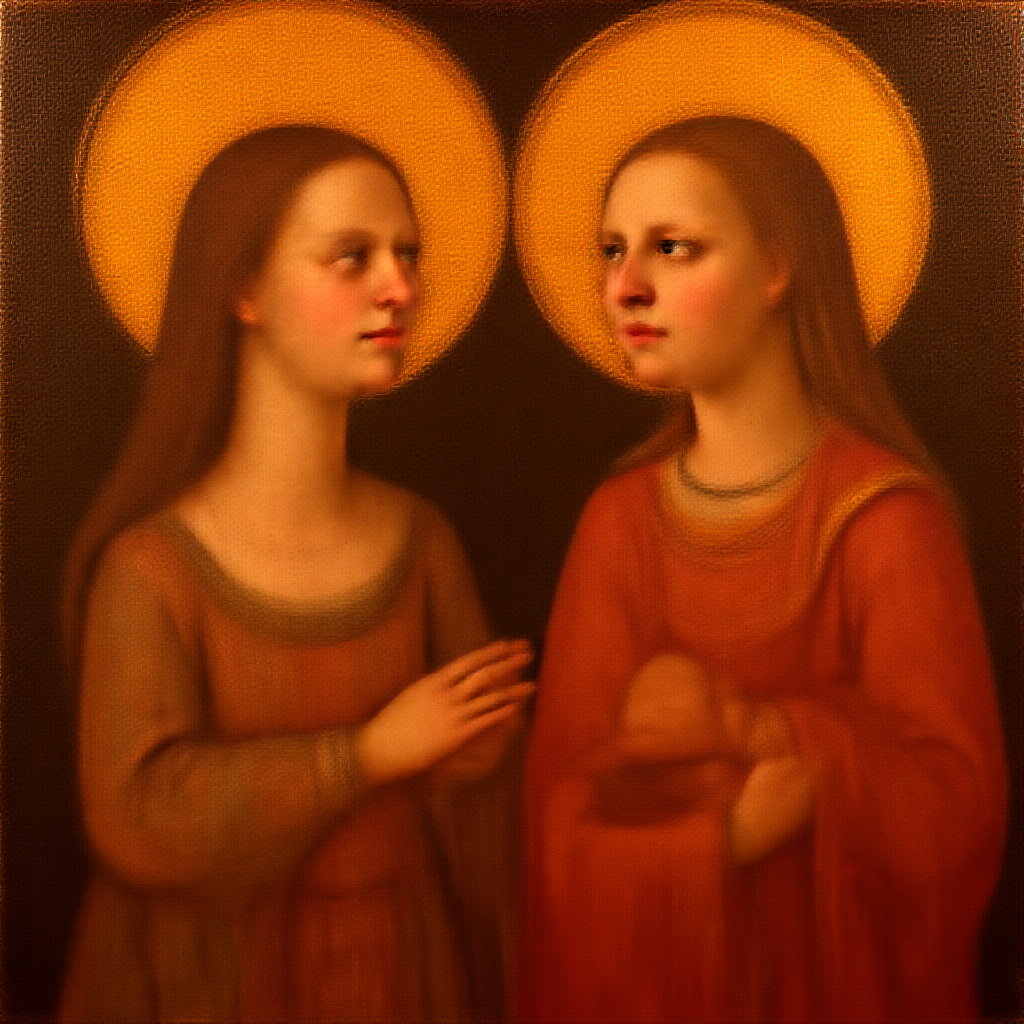
Sts. Perpetua and Felicity are among the most beloved martyrs of the early Church, distinguished by the remarkable fact that their story is preserved in Perpetua's own prison diary—one of the earliest first-person Christian writings outside Scripture. Perpetua was a well-born, well-educated young matron of about twenty-two years, married and the mother of an infant son. Felicity was her slave, who had recently given birth. Both, along with three other catechumens (Revocatus, Saturninus, and Secundulus), were arrested at Carthage in the persecution under the proconsul Saturninus during the reign of Septimius Severus. After their baptism, they were imprisoned. Perpetua's diary records her powerful resistance to her grieving father's pleas that she renounce her faith for the sake of her baby. She tells of a vision in which she climbed a ladder to a heavenly garden, and another in which she saw herself transformed into a man and fighting a fierce Egyptian—a symbol of her spiritual combat. Felicity's imprisonment was especially dramatic: she was initially barred from martyrdom because she was pregnant, and the jailers feared the crime of killing a child in the womb. After she gave birth, she could at last share her mistress's fate. The two women, along with their companions, were condemned to the arena. There they were gored by a heifer (a cow) and then finished with the sword. Perpetua steadied the frightened Felicity during the combats, and a careless gladiator required Perpetua to guide his hand to her own throat. Their martyrdom on March 7, A.D. 203, during the Emperor's festival, is recorded in the Passion of Perpetua and Felicity, with Tertullian's preface and the prison diary written in Perpetua's own hand.
🛡 Patronage
Patron of: Nursing mothers, pregnant women, young mothers, maidens, students, bakers, midwives, wet nurses
💬 Words of the Saint
I cannot call myself anything other than what I am: a Christian.
📜 Key Facts
Born
c. 190 AD, Carthage
Died
March 7, 203 AD, Carthage (arena)
Feast Day
Mar 7
Canonized
Pre-Tridentine
🕊 Legacy
The Passion of Perpetua and Felicity is unique among early Christian writings because it preserves the voice of a woman martyr writing about her own experience. Perpetua's diary is one of the earliest surviving first-person Christian narratives. The account provides invaluable insight into early Christian prison life, the role of women in the early Church, and the psychological reality of facing martyrdom. The courage of both the young noblewoman and her slave—each overcoming different obstacles (family ties and pregnancy) to reach the same glorious end—has inspired Christians for nearly two millennia. Their feast is celebrated on February 7 (Roman Martyrology) or March 7 (the actual date of martyrdom).