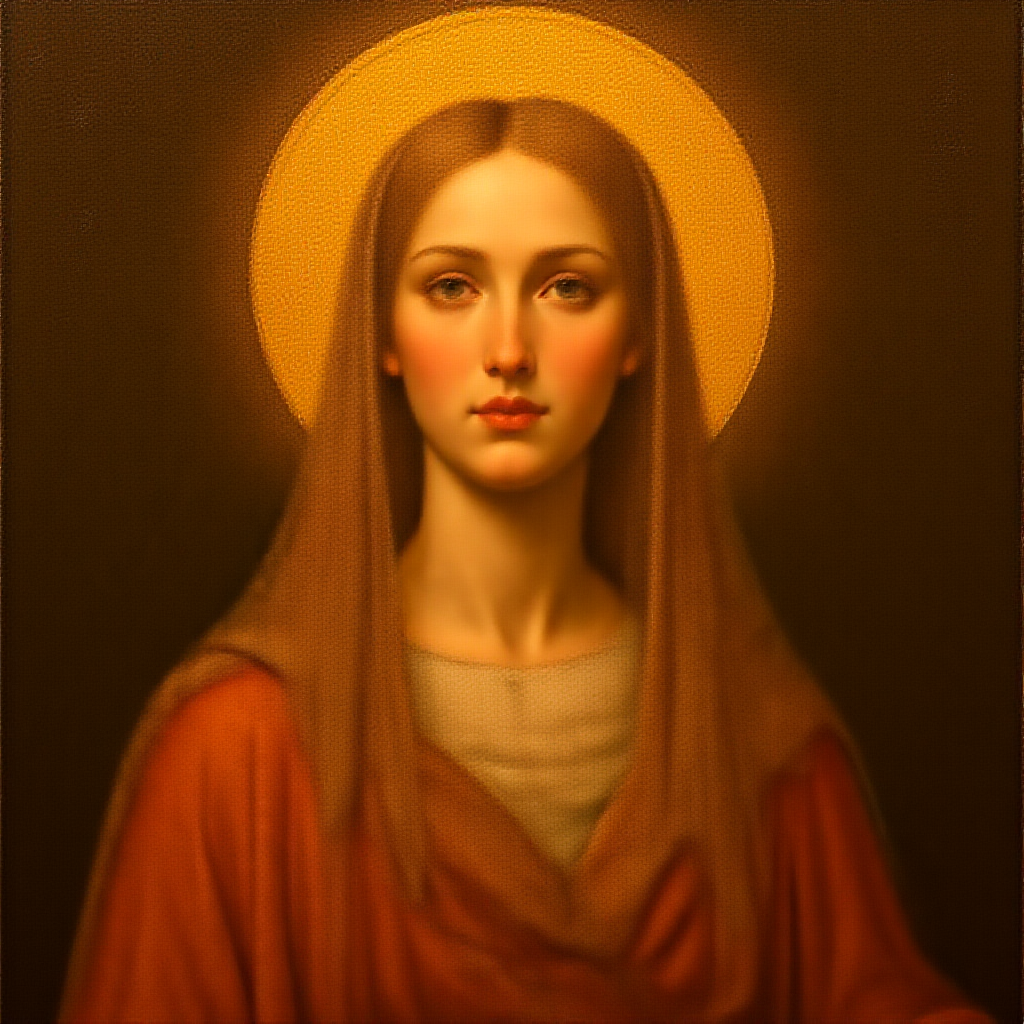
St. Helen
c. 246-330
📅 Feast Day: May 18
📖 Life Timeline
c. AD 250
Born at Drepanum, Bithynia (later renamed Helenopolis)
c. AD 270
Marries Constantius Chlorus
AD 274
Gives birth to Constantine at Naissus, Upper Moesia
AD 292
Constantius abandons Helena for political marriage to Theodora
AD 308
Constantius dies; Constantine summons Helena to court and makes her Augusta
AD 312
Converts to Christianity after Constantine's victory over Maxentius
AD 326
Pilgrimage to Palestine; discovers the True Cross; builds churches in Bethlehem and Jerusalem
AD 327
Constantine renames her birthplace Helenopolis in her honor
c. AD 330
Dies at age ~80 with Constantine at her side; buried in the Church of the Apostles, Constantinople
✝ Biography
St. Helena was the mother of Emperor Constantine the Great and one of the most influential women of early Christianity. Born about the mid-third century, possibly at Drepanum on the Nicomedian Gulf, she was of humble parentage—St. Ambrose called her a stabularia (inn-keeper's daughter). The medieval English tradition that she was a British princess has no historical foundation. She became the lawful wife of Constantius Chlorus, and her son Constantine was born at Naissus in 274. In 292, Constantius abandoned Helena for a political marriage to Theodora, but Constantine remained devoted to his mother. After Constantius's death in 308, Constantine summoned Helena to court, conferred upon her the title of Augusta, and had coins struck bearing her image. Under her son's influence, she embraced Christianity after his victory over Maxentius in 312. Eusebius attests that she "became such a devout servant of God, that one might believe her to have been from her very childhood a disciple of the Redeemer." Despite her advanced age, she undertook a pilgrimage to Palestine after 324, when Constantine had become sole emperor. There she erected churches at the Grotto of the Nativity in Bethlehem and on the Mount of Ascension near Jerusalem. Her stay in Jerusalem also became the origin of the tradition—first recorded by Rufinus—that she discovered the True Cross of Christ. Her princely munificence extended to individuals and entire communities; the poor were her special care. In Rome, her memory is chiefly associated with the church of S. Croce in Gerusalemme. She died at age 80 or thereabouts, about 330, with Constantine at her side. Her body was interred in the Church of the Apostles in Constantinople.
🛡 Patronage
Patron of: Archaeologists, pilgrims, travelers, finding lost things, new spouses
💬 Words of the Saint
"She became such a devout servant of God, that one might believe her to have been from her very childhood a disciple of the Redeemer." — Eusebius
📜 Key Facts
Born
c. 246, Drepanum, Bithynia
Died
August 330 AD, Trier, Gaul
Feast Day
May 18
Canonized
Pre-Tridentine
🕊 Legacy
St. Helena's pilgrimage to the Holy Land fundamentally shaped Christian devotion and the geography of sacred sites. Her discovery of the True Cross became one of the most significant events in Christian tradition. The churches she built in Bethlehem and Jerusalem established enduring pilgrimage destinations. Her conversion at an advanced age and her generous patronage of the Church make her a model of devout piety. The Church of S. Croce in Gerusalemme in Rome preserves the memory of her devotion to the Holy Cross. Her feast is celebrated on August 18.
Browse Other Saints
St. Mary, Mother of God
Jan 1
St. Joseph
Mar 19
St. Francis of Assisi
Oct 4
St. Therese of Lisieux
Oct 1
St. Padre Pio
Sep 23
St. Augustine of Hippo
Aug 28
St. Catherine of Siena
Apr 29
St. John of the Cross
Dec 14
St. Teresa of Avila
Oct 15
St. Maximilian Kolbe
Aug 14
St. Faustina Kowalska
Oct 5
St. Thomas Aquinas
Jan 28
St. Benedict
Jul 11
St. Ignatius of Loyola
Jul 31
St. Joan of Arc
May 30
St. Peter the Apostle
Jun 29
St. Paul the Apostle
Jun 29
St. John the Apostle
Dec 27
St. Stephen, First Martyr
Dec 26
St. John the Baptist
Jun 24
St. Jude Thaddeus
Oct 28
St. Ignatius of Antioch
Dec 17
St. Polycarp
Feb 23
St. Lawrence
Aug 10
St. Cecilia
Nov 22
St. Agnes
Jan 21
Sts. Perpetua and Felicity
Mar 7
St. Sebastian
Jan 20
St. Valentine
Feb 14
St. Monica
Aug 27
St. Anthony the Great
Jan 17
St. Ambrose of Milan
Dec 7
St. Jerome
Sep 30
St. Gregory the Great
Mar 12
St. Martin of Tours
Nov 11
St. Basil the Great
Jan 2
St. Gregory Nazianzen
May 9
St. John Chrysostom
Jan 27
St. Cyril of Jerusalem
Mar 18
St. Patrick
Mar 17
St. Christopher
Jul 25
St. Blaise
Feb 3
St. Scholastica
Feb 10
St. Columba
Jun 9
St. Brigid of Kildare
Feb 1
St. Dymphna
May 15
St. Anselm of Canterbury
Apr 21
St. Bernard of Clairvaux
Jun 20
St. Hildegard of Bingen
Sep 17
St. Dominic
Aug 8
St. Clare of Assisi
Aug 11
St. Elizabeth of Hungary
Nov 17
St. Rita of Cascia
May 22
St. Nicholas of Tolentino
Sep 10
St. Zita
Apr 28
St. Margaret of Cortona
Feb 22
St. Lidwina of Schiedam
Jul 15
St. Catherine of Genoa
Sep 15
St. Catherine of Bologna
Mar 9
St. Francis of Paola
Apr 2
St. Casimir
Mar 4
St. Stanislaus of Krakow
May 8
St. Vincent Ferrer
Apr 5
St. Philip Benizi
Aug 8
St. Clare of Montefalco
Aug 27
St. Elizabeth of Portugal
Jul 3
St. Richard of Chichester
Apr 10
St. Francis Xavier
Dec 3
St. Teresa of Jesus
Oct 15
St. Francis de Sales
Jan 24
St. Jane Frances de Chantal
Dec 13
St. Philip Neri
May 26
St. John of God
Mar 8
St. Francis Borgia
Oct 10
St. Robert Bellarmine
Sep 17
St. Stanislaus Kostka
Oct 15
St. Aloysius Gonzaga
Jun 21
St. Camillus de Lellis
Jul 14
St. Martin de Porres
Nov 3
St. Benedict the Moor
Apr 15
St. Mariana de Jesús
May 21
St. Margaret Mary Alacoque
Oct 16
St. Alphonsus Liguori
Aug 1
St. John Vianney (Curé of Ars)
Aug 4
St. Gerald Majella
Oct 16
St. Isidore the Laborer
May 15
St. Vincent de Paul
Sep 27
St. Louise de Marillac
Mar 15
St. Kateri Tekakwitha
Apr 17
St. Andrew of Corsica
Jan 9
St. Benedict Joseph Labre
Jul 16
St. John Bosco (Don Bosco)
Jan 31
St. Elizabeth Ann Seton
Jan 4
St. Frances Xavier Cabrini
Jul 13
St. Damien of Molokai
Apr 15
St. Anthony Mary Claret
Oct 24
St. Gemma Galgani
Jun 11
St. Maria Goretti
Jul 6
St. Mother Teresa
Sep 5
St. Pius X
Aug 21
St. John XXIII
Sep 11
St. John Paul II
Oct 22
St. Oscar Romero
Mar 14
St. Josemaría Escrivá
Jun 26
St. Charles Lwanga
Jun 3
St. Kizito
Jun 3
St. Andrew Dung Lac
Nov 24
St. Gianna Beretta Molla
Apr 28
St. Elizabeth of the Trinity
Nov 15
St. Katharine Drexel
Mar 3
St. Junipero Serra
Jul 1
St. Kuriakose Elias Chavara
Jan 6
St. Therese of the Andes
Oct 13
St. Edith Stein
Aug 9
St. Antonia D'Amburgo
Jan 23
St. John Neumann
Jan 5
St. Felix of Cantalice
May 18
St. John Fisher
Jun 22
St. Thomas More
Jul 6
St. John of Capistrano
Oct 23
St. Charles Borromeo
Nov 4
St. Peter Canisius
Dec 21
St. Anthony of Padua
Jun 13
St. John Eudes
Aug 19
St. Irenaeus of Lyons
June 3
St. Athanasius the Great
May 2
St. Cyprian of Carthage
September 16
St. Nicholas of Myra
December 6
St. George
April 23
St. Albert the Great
November 15
St. Bonaventure
July 15
St. Peter Damian
February 21
St. Charles de Foucauld
January 1
St. Zélie Martin
November 28
St. Pope Paul VI
September 21
St. Pope Pius XII
October 9
St. John Paul I
September 26
St. Gregory of Nyssa
September 10
St. Hilary of Poitiers
January 13
St. Caesarius of Arles
August 27
St. Caesarius of Heisterbach
April 25
St. Margaret of Scotland
November 16
St. Wenceslas
September 28
St. Cunegunda
March 3
St. Benedict of Aniane
February 11
St. Adam, First Man
Dec 20
St. Eve, First Woman
Dec 20
St. Abel, First Martyr
Aug 2
St. Enoch, The Walker with God
Nov 12
St. Noah, Builder of the Ark
Feb 6 (Oct 9 in East)
St. Abraham, Father of Faith
Sep 9
St. Sarah, Matriarch of Promise
Sep 9
St. Isaac, Child of Promise
Oct 29
St. Rebekah, Chosen Bride
Oct 29
St. Jacob, Father of the Twelve Tribes
Oct 29
St. Rachel, Beloved Wife
Oct 29
St. Joseph of Arimathea (OT Joseph)
Apr 1
St. Moses, Lawgiver and Prophet
Sep 4
St. Aaron, First High Priest
Sep 4
St. Joshua, Son of Nun
Jan 1
St. Ruth, Moabite Convert
Feb 29
St. Samuel, Last Judge and Prophet
Aug 20
St. Hannah, Mother of Samuel
Sep 14
St. David, Shepherd King
Jan 9 (Jun 24 in some calendars)
St. Solomon, Wise King
Jan 26
St. Elijah, The Thunder Prophet
Jul 20
St. Elisha, Successor of Elijah
Dec 18
St. Job, Patient Sufferer
Nov 22
St. Jeremiah, Weeping Prophet
Sep 14
St. Baruch, Scribe of Jeremiah
Aug 30
St. Ezekiel, Gatekeeper Prophet
Dec 30
St. Daniel, Interpreter of Dreams
Nov 17
Sts. Hananiah, Azariah, Mishael (Three Young Men)
Sep 15
St. Esther, Deliverer of the Jews
Mar 16
St. Judith, Widow Heroine
Feb 10
St. Tobias, Faithful Pilgrim
Mar 17
St. Jonah, Prophet in the Fish
Jan 27
St. Zechariah, Priest and Father of John the Baptist
Sep 23
St. Simeon, The Righteous Elder
Feb 2
St. Anna (Hannah), Prophetess
Feb 2